UV Flatbed Printers Drive Leapfrog Development in Industrial Manufacturing
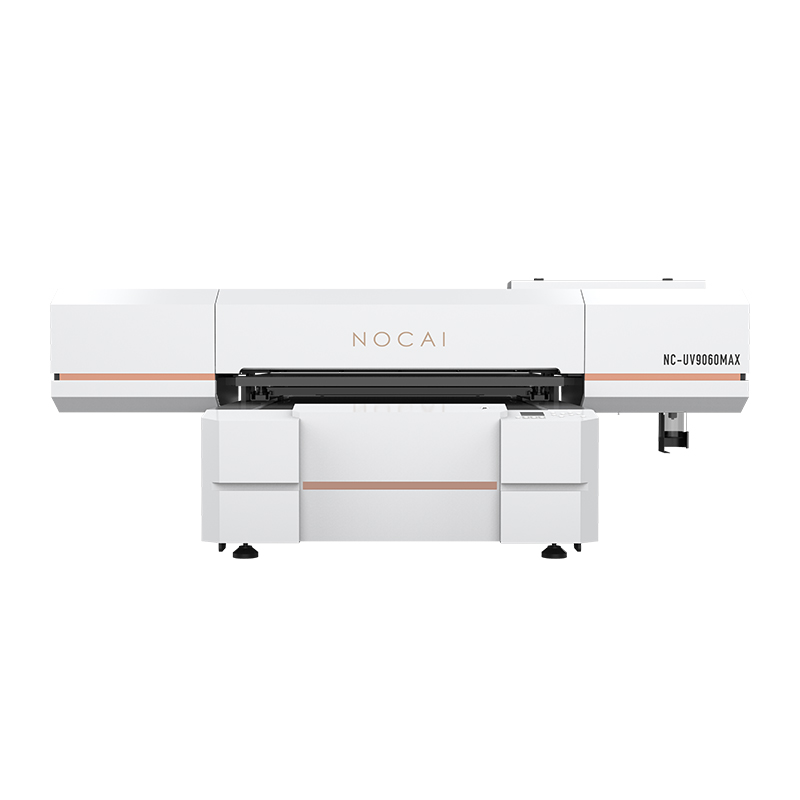
Amid the wave of industrial manufacturing moving toward intelligence and personalization, UV flatbed printers, with their disruptive technological attributes, are emerging as a key force driving the industry to achieve leapfrog development. They have transcended the scope of traditional printing tools and evolved into a revolutionary digital manufacturing platform, reshaping production models and industrial boundaries.
Their core breakthrough lies in their ability to “print on almost anything.” Freed from the constraints of substrates, they can print directly on any flat material such as glass, metal, wood, ceramics, plastics, and even leather. This exceptional material adaptability extends the reach of digital production to numerous industries including building materials, home appliances, electronics, gifts, and apparel, enabling a broad leap from “manufacturing” to “smart manufacturing.”
A more profound transformation lies in the revolution of production logic. UV flatbed printers have achieved an epic leap from “large-scale standardization to large-scale personalization.” They require no plate-making, can print a single piece, and each piece can be unique—making “on-demand production” and “customized personalization” economically feasible. A photo uploaded by a consumer can be instantly transformed into a one-of-a-kind phone case, ceramic tile, or furniture panel. This completely reverses the long-standing pain points of traditional industry—”long cycles and high inventory”—and drives the supply chain toward an agile model of “fast response and zero inventory.”
At the same time, they have brought about a dual revolution in efficiency and sustainability. The instant curing property of UV inks allows products to be “ready on the spot,” compressing the production cycle to the limit. Their 100% solid content and lack of volatile organic compounds (VOCs) also align with the requirements of green manufacturing, realizing the coordinated advancement of industrial upgrading and sustainable development.
Furthermore, UV printers have driven the elevation of value creation. They are not just decorative tools, but also catalysts for design innovation. Designers can seamlessly realize their ideas on real products, accelerating prototype verification; they can also be integrated with automated production lines, forming flexible manufacturing units through the collaboration of visual positioning and robotic arms, serving as an indispensable cornerstone for the implementation of Industry 4.0.
In summary, with their core advantages of digitization, flexibility, and sustainability, UV flatbed printers are comprehensively driving industrial manufacturing to bid farewell to old paradigms and move toward a new era centered on users, driven by data, and characterized by high efficiency and sustainability—from the breadth and depth of production to the dimension of value. They truly deserve to be called the digital engine for achieving leapfrog development.