UV Flatbed Printers and 3D Printing Technology: Analysis of Characteristics and Application Integration Paths
As vital tools for digital manufacturing, UV flatbed printers and 3D printing technology focus on “surface modification” and “structural fabrication” as their core functions respectively, and they exhibit unique value in contemporary manufacturing, cultural and creative, medical, and other fields. The two technologies have highly complementary characteristics, and their integration paths are opening up new possibilities for intelligent manufacturing.
Analysis of Characteristics: Technical Positioning and Core Advantages
- UV Flatbed Printers: Expert in High-Precision Surface Treatment
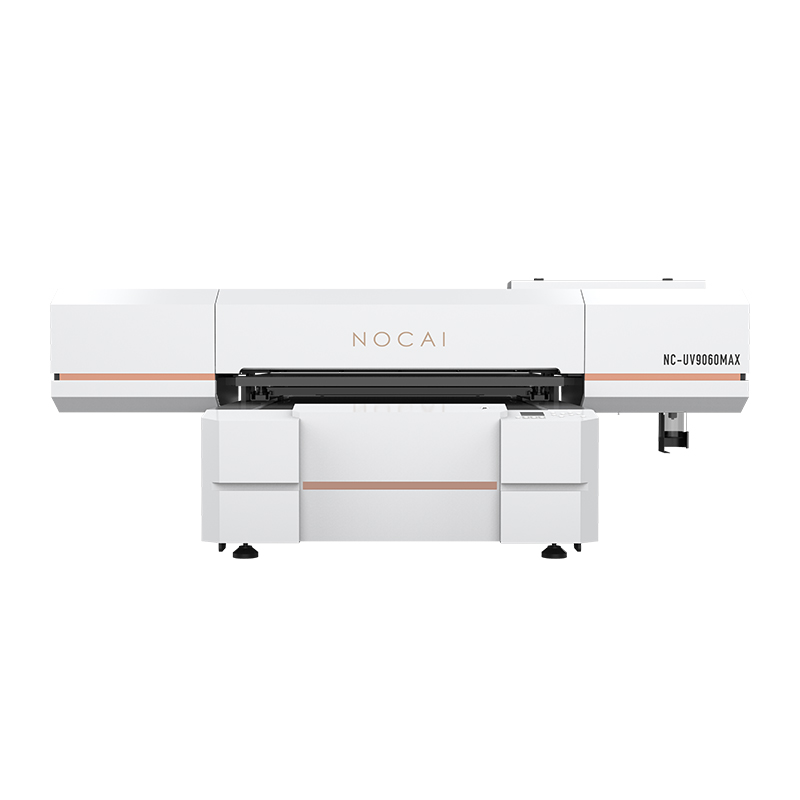
Based on the principle of UV curing, UV flatbed printers precisely spray UV ink onto the surface of objects through an inkjet system, which then instantly cures to form patterns. Their core characteristics include:
- Broad Substrate Compatibility: They can print directly on various flat or slightly curved materials (such as metal, glass, wood, and plastic), breaking the material limitations of traditional printing.
- High Resolution and Color Performance: They support the output of high-definition images and even 3D embossed effects, with high color saturation, meeting high-end customization needs.
- Instant Curing and Environmental Friendliness: UV ink cures quickly, requiring no drying time. Moreover, it contains no volatile organic compounds (VOCs), complying with green production standards.
- 3D Printing Technology: A Revolutionary in Structural Fabrication
3D printing (additive manufacturing) constructs three-dimensional solids by stacking materials layer by layer, with its core advantages as follows:
- Mold-Free Forming and Complex Structure Fabrication: It enables rapid manufacturing of complex geometric shapes (such as hollow and internal cavity structures) without the need for molds, significantly shortening R&D cycles.
- Diversity in Materials and Functions: It supports materials like plastics, resins, metals, and ceramics, and can be combined with biological materials or conductive materials to achieve functional integration.
- Personalized and Distributed Production: It is suitable for small-batch customized production (e.g., medical implants, aerospace components) and drives the transformation of manufacturing models toward distributed production.
Application Integration Paths: Synergy from “Manufacturing” to “Smart Manufacturing”
The essence of their integration lies in the integrated realization of structural fabrication and surface functionalization, with specific paths including:
- Process Flow Integration: 3D Printing + UV Surface Modification
After the completion of 3D-printed components, UV flatbed printers are used directly to add surface patterns, textures, or functional coatings (e.g., antibacterial or conductive coatings). For instance:
- Cultural and Creative Products Field: First, 3D printing is employed to create sculpture blanks. Then UV technology is applied to restore textures such as bronze and marble, achieving high fidelity in cultural relic reproduction and artistic creation.
- Electronic Manufacturing Field: Conductive patterns are directly printed on 3D-printed circuit board brackets, which simplifies the traditional etching process and enables structure-function integration.
- Material and Equipment Integration: Multifunctional Composite Manufacturing Systems
Develop hybrid manufacturing equipment that integrates 3D printing and UV jet printing, enabling simultaneous completion of color application or special surface treatment during the printing process. Examples include:
- Full-Color 3D Printing: During powder sintering or photopolymerization 3D printing, integrated UV nozzles are used for layer-by-layer coloring, realizing the output of colored models without post-processing dyeing.
- Customized Medical Implants: On the surface of 3D-printed titanium alloy prostheses, UV technology is applied to spray bioactive coatings, which promote bone growth and allow marking of patient information.
- Data Chain Integration: Design-Manufacturing Integration
Leverage a unified digital platform (such as CAD/CAM software) to coordinate structural design and surface patterns, realizing the simultaneous optimization of “model-texture”. Examples include:
- Customized Footwear: During the design phase, the shoe structure and patterns are planned simultaneously. The hybrid manufacturing system is used to produce the finished product in one go, reducing assembly steps.
- Architectural Model Making: When 3D printing architectural sand tables, UV printing is directly applied to reproduce exterior wall material textures, enhancing the authenticity of the display effect.
Future Outlook: Technological Boundaries and Industrial Impact
With advancements in materials science and intelligent control, the in-depth integration of UV flatbed printing and 3D printing will drive the following transformations:
- Enhanced Manufacturing Efficiency: Reduce post-processing procedures and realize “one piece, one color” large-scale customization.
- Expanded Product Functions: Combine nanomaterials with UV inks to develop smart objects with properties such as sensing and self-healing.
- Sustainable Development: Replace overall material dyeing with local surface modification, reducing resource consumption and waste generation.
UV flatbed printers and 3D printing technology are shifting from “single-point breakthroughs” to “systematic synergy”. This is not only a combination of processes, but also a reconstruction of design thinking and manufacturing logic. This integration path will accelerate the evolution of the manufacturing industry toward personalization, functionalization, and greenization, providing a core driving force for future smart manufacturing.