
Screen Printing vs. Heat Transfer vs. UV Printing: How to Choose Without Costly Mistakes
In the customization industry, screen printing, heat transfer, and UV flatbed printing are three of the most common methods. Many buyers fall into the trap of asking “which one is better,” but the truth is—each has its own ideal use case. Choosing the wrong process can lead to inefficiency and even costly production losses. This guide will help you make the right decision from the start.
1. Screen Printing: Classic but High Threshold
Screen printing uses a squeegee to push ink through a mesh stencil onto the material. It’s one of the oldest printing methods still in use.
Pros:
Thick ink layers, rich and vibrant colors, excellent durability. Very cost-effective for large-volume production with a single design.
Cons:
Each color requires a separate screen, making small batches expensive. Not suitable for gradients or complex details. Setup and changeovers are time-consuming. Solvent-based inks produce strong odors and increasing environmental concerns.
Best for:
High-volume orders (thousands of units), simple graphics with solid colors, textile and apparel printing.
Not ideal for:
Small-batch customization, multi-design jobs, gradient images, or environmentally sensitive indoor production.
2. Heat Transfer: Flexible but Consumable-Heavy
Heat transfer involves printing a design onto transfer paper, then applying it to the product using heat and pressure.
Pros:
Supports full-color images and fine details. No plate-making required. Low initial investment and suitable for one-off prints.
Cons:
Each print consumes transfer paper, leading to higher ongoing costs. The process involves multiple steps (print → cut → align → press), which reduces efficiency. Limited outdoor durability. Works only on specific materials (e.g., fabrics, coated ceramics, coated metals), often requiring pre-treatment.
Best for:
Small-batch, full-color designs—custom T-shirts, mugs, mouse pads, and souvenirs.
Not ideal for:
Large-scale production, outdoor applications, or uncoated rigid materials like raw glass, acrylic, or wood.
3. UV Printing: Versatile but Requires Realistic Expectations
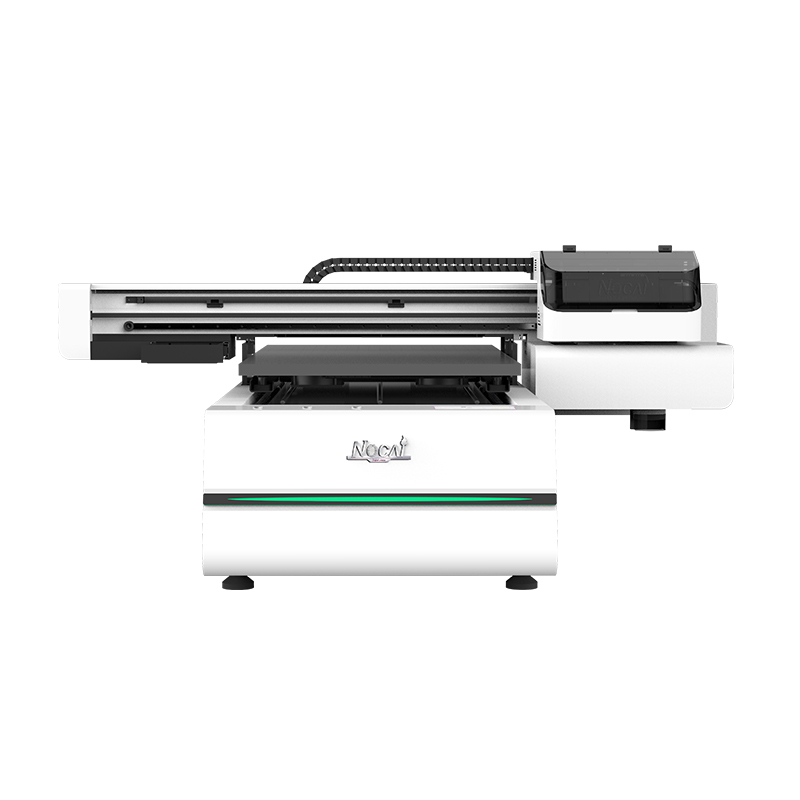
UV flatbed printers spray ink directly onto the material surface and cure it instantly using UV light.
Pros:
No plate-making, print-on-demand—even for a single item. Compatible with a wide range of materials (glass, metal, acrylic, wood, leather, stone, plastic, etc.). Strong adhesion, waterproof, scratch-resistant. Supports white ink, varnish, and embossed effects. UV curing produces near-zero VOC emissions, making it more environmentally friendly.
Cons:
Higher upfront cost compared to entry-level heat transfer setups. Requires regular printhead maintenance. For large-volume, simple solid-color designs, the cost per unit can be higher than screen printing.
Best for:
Small-batch, multi-design customization; creative products; crafts; electronics casings; acrylic signage; phone cases; personalized gifts; prototyping.
Not ideal for:
Mass production of simple, single-color designs.
4. How to Choose: A Simple Decision Framework
Ask yourself these three questions:
1. What material are you printing on?
Fabrics or coated items → Heat transfer
Rigid materials or irregular shapes → UV printing
Large volumes, simple designs, cost less critical → Screen printing
2. What’s your order volume and variety?
High volume, single design → Screen printing is cost-effective
Small batches, multiple designs, frequent changes → UV printing is more flexible
3. What are your quality and durability requirements?
Outdoor use, scratch resistance, waterproof → UV printing is superior
Thick, rich ink feel for large runs → Screen printing still has an edge
The right process can turn an average order into a profitable one.Screen printing excels in large-scale, single-design production.Heat transfer is ideal for full-color customization on fabrics and coated items.UV printing stands out as the most versatile solution for small-batch, multi-material applications.
For most startups and small-to-medium businesses, UV printing offers the best balance of flexibility and capability in a fast-changing market. The key is to clearly define your products and business model first—then choose the process that fits, so you avoid unnecessary costs and missed opportunities.
