In advertising, packaging, and personalized production, digital printers have gradually replaced traditional printing methods thanks to their high efficiency and precision. They can transform a digital design into a finished image quickly and intelligently. But how exactly does this process work?
1. Data Input and Image Processing
First, the design file is imported into a computer and processed by RIP software (Raster Image Processor). RIP converts digital graphics into print commands while controlling color management, resolution, ink volume, and print paths—ensuring high-precision output.
2. Printhead Control and Inkjet Firing
Once data is sent to the printer, the printhead—the core component—starts working. Containing thousands of microscopic nozzles, it ejects ink droplets via piezoelectric or thermal technology at high speed. Each droplet’s volume and position are precisely controlled within microns, ensuring sharp, accurate image reproduction.
3. Ink Adhesion and Color Overlay
Digital printing uses the CMYK color model (Cyan, Magenta, Yellow, Black). By overlaying these four colors in varying amounts, it produces rich tones. Advanced printers may include light cyan (Lc), light magenta (Lm), white ink, or varnish channels for smoother gradients and photo-quality output.
4. Curing and Fixing Process
Different printers use different curing methods:
-
Water-based or solvent printers rely on heat or natural evaporation to dry ink.
-
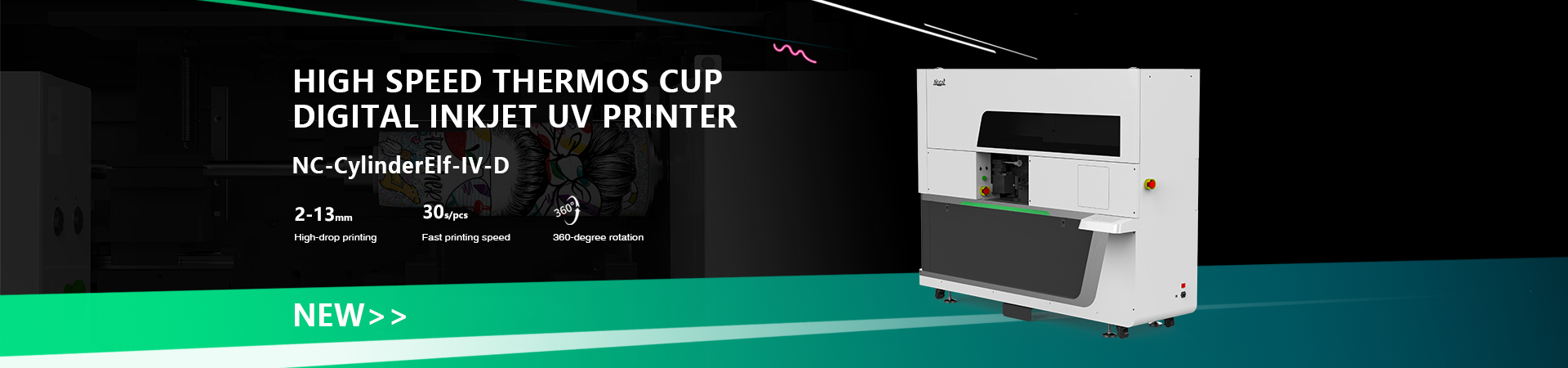
UV printers use ultraviolet light to instantly cure UV ink.
Once cured, the ink bonds tightly to the substrate, offering excellent waterproof and scratch-resistant performance.
5. Finishing and Quality Control
After printing, the system automatically checks print quality. Some models feature automatic cleaning and nozzle detection. Depending on application needs, users can apply lamination, cutting, or varnishing to enhance durability and appearance.
Conclusion
From data input to inkjet output and final curing, every step of the digital printing process blends precision mechanics with intelligent imaging algorithms. This technology not only boosts efficiency and flexibility but also turns digital creativity into tangible art—perfectly merging technology and aesthetics.